For most of my adult life, I assumed antioxidants worked the way the supermarket aisle suggests they work. The body produces something harmful. The antioxidant mops it up. More antioxidant, less harm. Simple.
It turns out that picture is almost completely wrong.
The story of how the field figured that out is, to me, one of the most interesting in modern wellness science. It's also the reason I think molecular hydrogen deserves the attention it's quietly attracting. Because hydrogen seems to do the one thing other antioxidants can't.
It chooses.
The trials that changed the conversation
In 1994, The New England Journal of Medicine published the results of a trial that was supposed to settle a question, not unsettle it.
The Alpha-Tocopherol, Beta-Carotene Cancer Prevention Study — known as the ATBC trial — followed 29,133 male smokers in Finland for five to eight years. Half were given vitamin E. Half were given beta-carotene. Both supplements had previously looked promising in observational studies. The trial was designed to confirm what researchers thought they already knew: that loading the system with antioxidants would reduce the rate of lung cancer.
It did not.
The men taking beta-carotene developed lung cancer at a rate eighteen per cent higher than those taking placebo. The result was statistically robust. It was also, in the words of the authors, unexpected.
A larger trial followed. The Selenium and Vitamin E Cancer Prevention Trial — SELECT — recruited over 35,000 men in the United States, Canada and Puerto Rico to test whether vitamin E and selenium would prevent prostate cancer. Published in JAMA in 2011, it reported that vitamin E supplementation was associated with a seventeen per cent increase in prostate cancer risk compared to placebo.
Two of the largest, most carefully designed antioxidant supplement trials ever conducted, run by major research institutions in two different decades, both reaching the same uncomfortable conclusion. The supplements that were meant to help were doing something closer to the opposite.
Why that result wasn't really a surprise
Once you understand what free radicals actually do in the body, the trial results stop looking strange. They start looking inevitable.
Free radicals are not, on balance, the enemy. They are signals. The body uses them to communicate between cells, to regulate immune responses, to trigger the adaptive changes that follow exercise, to mark old cells for clearance. The fashionable phrase in biology is redox signalling — the language the body speaks to itself in the currency of oxidation.
The problem isn't free radicals as a category. The problem is a specific subset of them — the most reactive species, particularly hydroxyl radicals and peroxynitrite — that cause indiscriminate damage rather than carrying useful information. The hydroxyl radical, in particular, is so reactive it tears through whatever it encounters: cell membranes, proteins, mitochondrial DNA.
What the ATBC and SELECT trials were quietly demonstrating is that flooding the body with broad-spectrum antioxidants doesn't just neutralise the harmful free radicals. It also mutes the useful ones. And when you mute the signals the body uses to mark damaged cells for clearance, you may end up with more cancer rather than less.
A blunt instrument applied to a precision system.
What changed in 2007
In Nature Medicine in 2007, a team at Nippon Medical School (Ohsawa et al.) published a paper that is now one of the most-cited papers in the field.
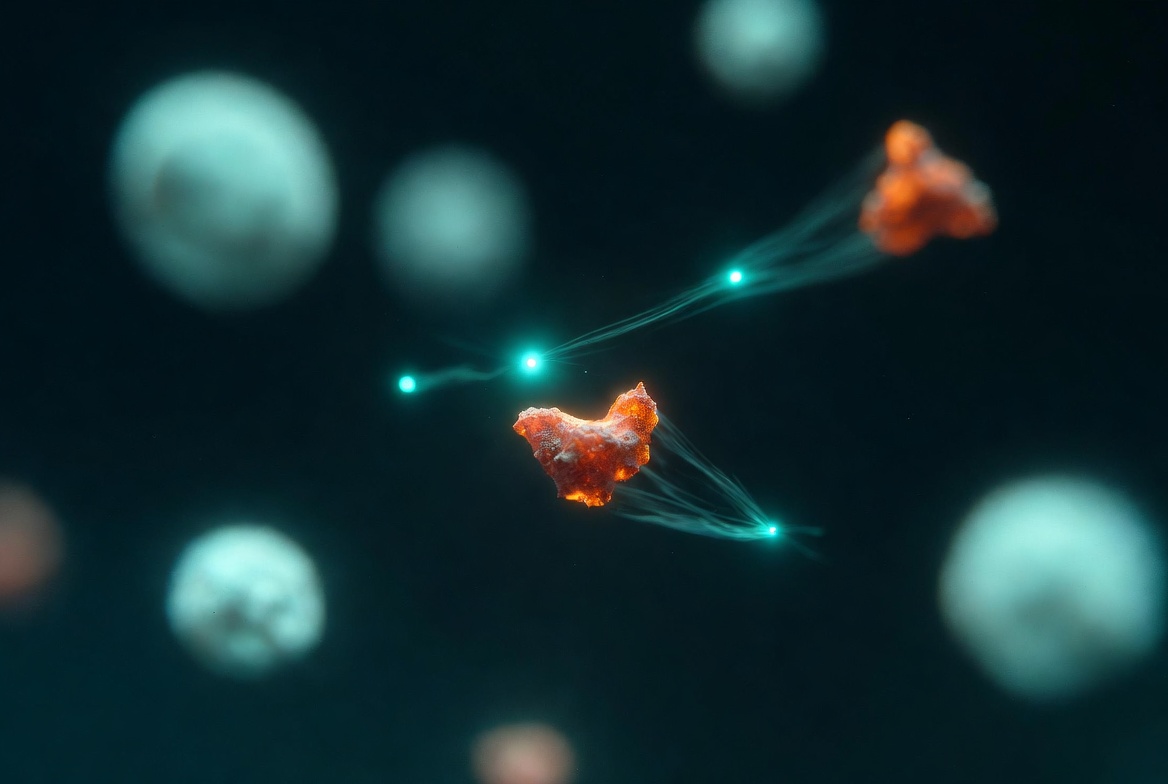
Ohsawa's team showed something that ran counter to almost everything the field had assumed about how antioxidants behave. Molecular hydrogen, the smallest molecule in existence, appeared to selectively neutralise the most damaging free radical species — hydroxyl radicals and peroxynitrite — while leaving the beneficial signalling radicals largely untouched.
A discriminating antioxidant. The phrase the field eventually settled on was selective antioxidant.
It's worth being honest about what the 2007 paper was. It was an animal model study. The selectivity has been replicated in subsequent research, including human trials, but the foundational paper itself was preclinical. The reason it became one of the most-cited papers in its field isn't that it proved anything definitively. It's that it proposed a mechanism nobody else had — and the mechanism made sense of a great deal of clinical data that hadn't quite added up.
The chemistry, briefly
Why hydrogen selects the way it does is partly a story about reactivity.
The hydroxyl radical is one of the most reactive species in biology. It will attack almost anything it encounters, which is exactly what makes it destructive. But it's also what makes it vulnerable. Less reactive free radicals — the ones the body uses for signalling — are stable enough to be ignored by hydrogen. Hydroxyl radicals are not.
The result is something close to a chemical filter. Hydrogen passes through tissue freely, encounters all the various reactive species the body is producing, and reacts preferentially with the most aggressive ones.
The other piece of the picture is access. Hydrogen is small enough and electrically neutral enough to cross cell membranes without help — including the membranes around the mitochondria, where most of the body's free radical production happens. Most antioxidants struggle to reach those compartments. Hydrogen, by virtue of being almost nothing, gets in everywhere.
Selectivity plus access. That's the argument.
What this doesn't mean
It does not mean hydrogen is a treatment. It does not mean it cures anything. It does not mean every claim made by every hydrogen company is supported by the research, because plainly it isn't.
What it does mean is that the mechanism — the one specific question the ATBC and SELECT trials had implicitly been asking — has a credible answer for the first time. If you accept that broad-spectrum antioxidant flooding is a blunt approach to a system that responds badly to bluntness, the question becomes whether something more selective is possible. Hydrogen is the most studied candidate.
Whether it lives up to that promise across the full range of conditions and populations the research is exploring — that's still being worked out. There are open questions about optimal dose, optimal duration, individual variability. There are studies that have returned null results. The field is not settled.
But the selectivity story is the one piece of the science I keep coming back to, and the one I find hardest to argue with. It's why we built H2 Pure Life around inhalation rather than supplements, and why the machines we sell deliver the molecule itself rather than something the body has to convert.