A quietly honest guide
What is hydrogen therapy? A quietly honest guide to the science.
What molecular hydrogen does in the body, what a growing body of research suggests it may support, and what it carefully doesn't.
Hydrogen therapy is the practice of inhaling small, regulated amounts of molecular hydrogen — the simplest molecule in the universe, made of just two hydrogen atoms — to support the body’s own protective and recovery systems.
It isn’t a treatment. It isn’t a medicine. It’s a wellness practice grounded in a growing body of peer-reviewed research that has, over the past two decades, quietly become one of the most studied areas in functional health.
The science is pointing strongly toward something genuinely interesting: that molecular hydrogen behaves as a selective antioxidant — one that targets the kinds of free radicals the body has reason to neutralise, while leaving the signalling molecules cells depend on untouched. Research suggests this selectivity may be part of what makes hydrogen behave so differently from conventional antioxidants.
Over a thousand peer-reviewed studies have now explored what molecular hydrogen does in the body. The findings are careful, the mechanisms are real, and the field is still unfolding.
This is a guide to what the science actually says — written for the curious, not the credulous.
The science, gently explained
How it works: the science, gently explained.
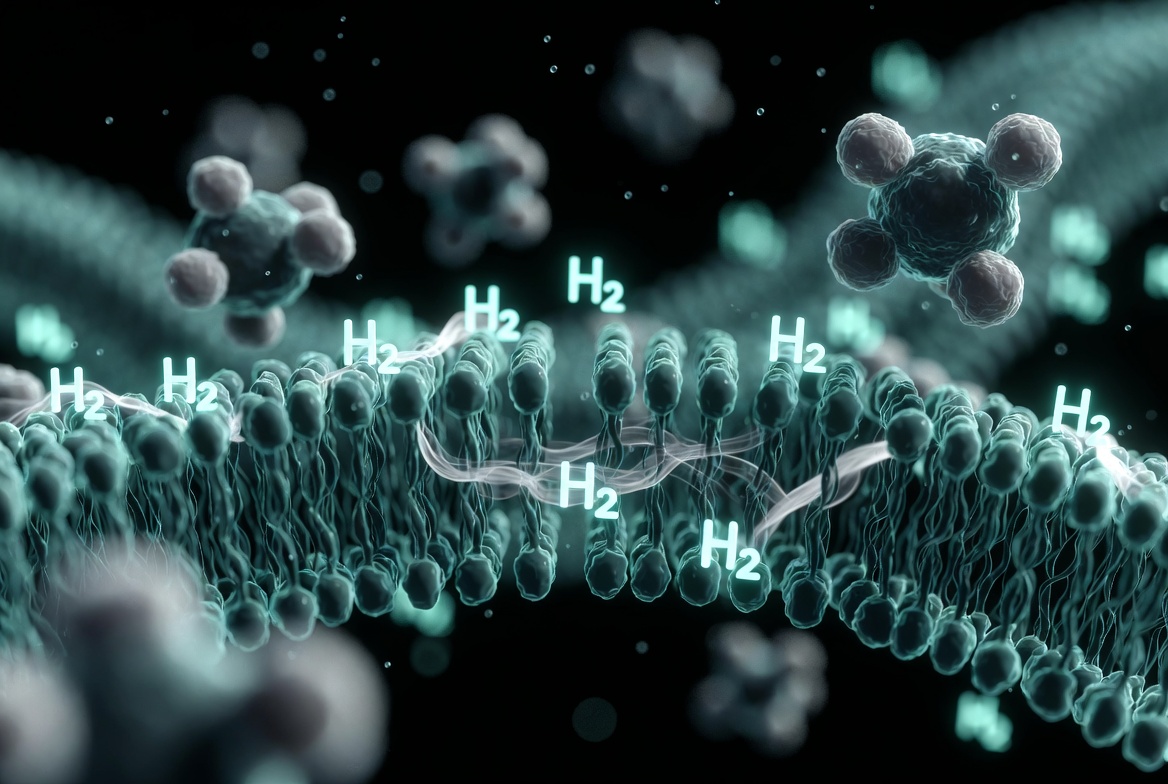
Molecular hydrogen is small. So small that it can do something almost no other therapeutic molecule can: it passes freely through cell membranes, including the blood-brain barrier, without needing a transport mechanism.
Once inside the cell, the research suggests it can reach the mitochondria — the small structures inside every cell that generate the energy your body runs on. Mitochondria are also one of the primary sites where harmful free radicals are produced as a by-product of energy production.
This matters because of what hydrogen does there.
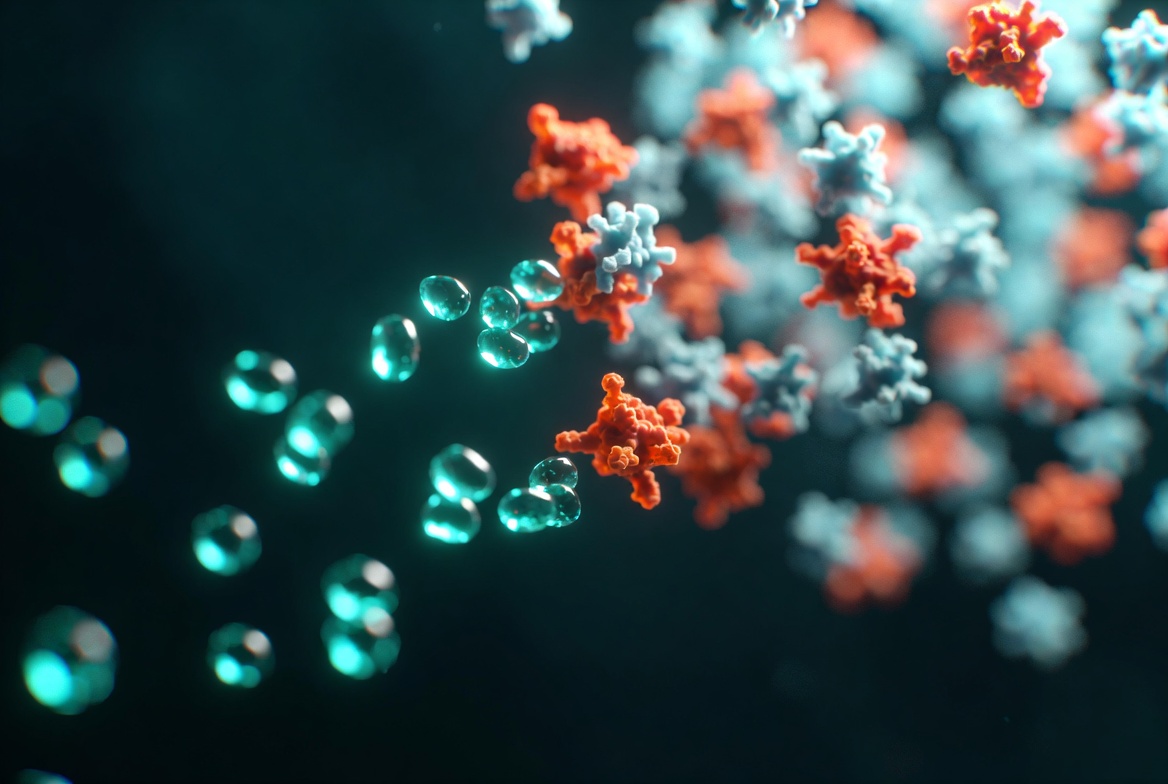
In 2007, a team of researchers at Nippon Medical School published a paper in Nature Medicine that set off the modern wave of hydrogen research. The study, by Ohsawa and colleagues, demonstrated that molecular hydrogen could selectively neutralise the most harmful free radical in the body — the hydroxyl radical — while leaving beneficial signalling radicals untouched (Ohsawa et al., Nature Medicine, 2007).
That selectivity is the part that changed the conversation. Most antioxidants act indiscriminately — they neutralise harmful radicals, but they also interfere with the radicals the body uses for legitimate cellular signalling. Research suggests molecular hydrogen behaves differently. It appears to read the room.
What the research suggests
What the research suggests it may support.
It’s worth being precise here, because the brand voice of the wellness industry tends to overclaim, and the research deserves better than that.
Hydrogen therapy is not a cure. It does not treat disease. What the research has explored, across more than a thousand peer-reviewed studies, is whether molecular hydrogen may support specific physiological processes — and the evidence in several areas is genuinely promising.
A growing body of research has examined hydrogen’s potential role in:
- Cellular oxidative stress. Studies have shown that hydrogen can reduce markers of oxidative stress in human and animal models — the same kind of cellular wear-and-tear that accumulates with age, intense exercise, and environmental exposure.
- Recovery after exertion. Research suggests hydrogen therapy may support recovery in athletes, with studies pointing to reduced markers of muscle fatigue and inflammation after exercise.
- Inflammatory response. Multiple studies have explored hydrogen’s role in modulating inflammatory signalling, with findings consistent with its mechanism as a selective antioxidant.
- Mitochondrial function. Because hydrogen can reach the mitochondria directly, researchers have explored its role in supporting mitochondrial efficiency — the engine room of cellular energy.
The careful framing here matters. The research is not claiming hydrogen fixes any of these things. It’s exploring whether hydrogen may support the body’s own systems in doing what they are already designed to do.
That distinction is the heart of the brand we built.

The felt experience
What hydrogen therapy feels like.
The science earns the trust. The feeling is what people come back for.
Many users report that after a session of hydrogen therapy, something quiet shifts. The mental fog they had grown used to lifts a little. Sleep settles more easily. Recovery from exertion feels less punishing. The body, in a sense, stops fighting itself.
These are subjective reports. They are not clinical outcomes. We share them because they are consistent with what a growing number of people describe — and because the research on oxidative stress, inflammation, and mitochondrial support is consistent with the kinds of experiences people report.
It’s also worth saying what hydrogen therapy doesn’t feel like. It isn’t stimulating. It isn’t sedating. There is no rush, no crash, no peak. Most people describe the experience as quietly restorative — closer to the feeling of a good night’s sleep than to anything pharmacological.
For many, it becomes a daily practice. Thirty to sixty minutes in a chair, with a thin nasal cannula, while reading, working, or simply sitting still. The simplest possible intervention with — the research suggests — meaningful biological depth.

Delivery methods
Inhalation vs other delivery methods: why it matters.
If you’ve come across molecular hydrogen before, it was probably in the form of hydrogen water — water that has had hydrogen gas dissolved into it, then sold in bottles, tablets, or generators that fizz it into a glass.
Hydrogen water is real. Some of the early research used it. But there are reasons the research community has increasingly moved toward inhalation, and they’re worth understanding.
- Concentration. Water can only hold so much dissolved hydrogen before it escapes back into the air. The concentration achievable through inhalation is significantly higher.
- Stability. Hydrogen dissolved in water begins escaping the moment the container is opened. By the time you finish a glass, the concentration has dropped sharply. Inhalation delivers a sustained, continuous dose.
- Duration. A glass of hydrogen water takes thirty seconds to drink. An inhalation session can be thirty minutes, an hour, or longer — giving the body a sustained exposure rather than a brief one.
- Dose. The research that has shown the most consistent effects has tended to use inhalation, at the kind of flow rates and durations that water-based delivery simply cannot match. At the dose serious research uses — not the minimum that has been tested — inhalation is the only practical route.
None of this means hydrogen water doesn’t work. It means that if you’re interested in what the research is actually finding, inhalation is where the conversation has moved.
Is it for you?
Is hydrogen therapy right for you?
Hydrogen therapy isn’t for everyone, and it isn’t a quick fix.
It tends to suit people who are paying attention to how they feel. People who have noticed something has shifted — energy, sleep, recovery, clarity — and who are looking for ways to support their biology that are grounded in real science rather than wellness theatre. People who are willing to make it a daily practice, because the research suggests consistency matters more than intensity.
It is not a substitute for medical care. It is not a treatment for any condition. If you have a diagnosed health concern, the right first conversation is with your doctor.
What it is, for the people it suits, is a quietly effective daily practice with a growing body of research behind it — and the kind of felt experience that, once you’ve felt it, tends to keep you coming back.
We built H2 Pure Life around the Hydro Nova because it delivers hydrogen at the kind of flow rate and purity the research community has been working with. Not the minimum that has been tested. The dose serious research uses.
If you’d like to see what we built and why, the Hydro Nova is where most people start.
A closing note
A note on intellectual honesty
We’ve tried to write this page the way we’d want one written for us — carefully, without hype, with the research treated with the respect it deserves.
If you’d like to go deeper, our research page holds the peer-reviewed citations, and our use cases page explores how the science applies to specific areas of wellbeing. If you’d rather see how this fits into a daily practice, our Real People page collects the experiences of people who have made hydrogen therapy part of their lives.
The science is still unfolding. We’ll keep updating this page as it does.
References
- Ohsawa, I. et al. (2007). Hydrogen acts as a therapeutic antioxidant by selectively reducing cytotoxic oxygen radicals. Nature Medicine, 13, 688–694. PubMed
- Sano, M. et al. (2020). Low-Flow Nasal Cannula Hydrogen Therapy. Journal of Clinical Medicine Research, 12, 674–681.
- Further reading: see our research bibliography for the full list of peer-reviewed research on molecular hydrogen.